
English
The English Department was established as an extension of the five existing departments within the College of Education, Shaqlawa, during the 2021-2022 academic year at Salahaddin University-Erbil. Recognizing that teaching is a powerful means of positively influencing the world, the English Department was founded to achieve its scientific and educational objectives. It provides critical opportunities for students to enhance their academic proficiency and elevate the standards of educational quality. The English Department offers a four-year undergraduate program culminating in a Bachelor of Arts degree in English Language Teaching, designed to prepare students as English teachers for high schools and other educational institutions. The curriculum includes courses on theoretical, methodological, and psychological approaches to the acquisition and teaching of foreign languages. Additionally, the department ensures that students gain supervised teaching experience prior to graduation.
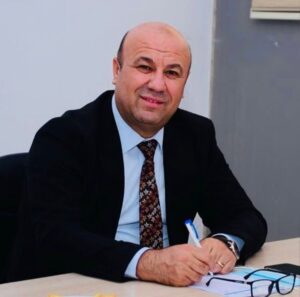
Mr. Ziyad the Head of the English Department has a crucial leadership role within college of Education/ Shaqlawa and is responsible for overseeing the department's operations, curriculum, and staff. His role in academic leadership lies in developing and implement the English curriculum in line with institutional goals and standards; ensuring alignment with educational policies, frameworks, and accreditation requirements. Head of English department Coordinate and supervise department activities, including scheduling classes, exams, and departmental meetings. Monitor and evaluate the performance of faculty members and provide constructive feedback. He fosters a collaborative and positive work environment.
The mission of the English Department is to foster critical thinking, creativity, and effective communication through the study of language, literature, and culture. Through developing students’ proficiency in reading, writing, listening, and speaking to prepare them for academic, professional, and personal success. Thus this process equip students with lifelong learning skills, enabling them to analyze complex ideas, express themselves confidently, and contribute meaningfully to society. .
Vision
The vision of the English Department is to be a center of excellence in language and literary studies, inspiring students to become innovative thinkers, effective communicators, and ethical leaders. Create a dynamic and inclusive learning environment that encourages intellectual curiosity, cultural understanding, and personal growth.
The learning outcomes from an English Department undergraduate program prepare students for graduate studies in several ways by equipping them with foundational knowledge, critical skills, and intellectual habits necessary for advanced academic work. Here’s how each category of learning outcomes contributes to graduate preparation. The learning outcomes lies in communication skill.
The learning outcomes from an English Department undergraduate program prepare students for graduate studies in several ways by equipping them with foundational knowledge, critical skills, and intellectual habits necessary for advanced academic work. Here’s how each category of learning outcomes contributes to graduate preparation. The learning outcomes lies in communication skill. linguistics, or literature via exchanging programs with other colleges, both local and international. Partnering with international universities or programs to expose students to global perspectives in English language and literature. Collaborating to share libraries, language labs, and educational technologies. Collaborating with TESOL (Teaching English to Speakers of Other Languages) organizations to improve English language teaching.
Degree Program Overview
An undergraduate study program in the English Department at a College of Education is typically designed to equip students with language proficiency, critical thinking, literary analysis, and teaching skills. This program aligns with the goal of preparing students to become competent English teachers or professionals in language-related fields.
Program Structure for Undergraduate Study in English Department Duration:
Four years (divided into 8 semesters)
Year 1: Foundational Learning
Focus on Basic skills in English, Grammar and Composition, Listening and Speaking Skill, Introduction to Literature Prose, Poetry, and Drama, Introduction to Educational Psychology Academic Writing and Reading Skills
Year 2: Intermediate Knowledge
Focus on Language Studies: Syntax and Morphology Advanced Phonetics and Phonology Genres of Literature (Drama, Fiction, Poetry), and Literature Ages
Year 3: Advanced Specialization
Focus on Advanced Language Studies, Translation and Interpretation, Advanced Literature, Research Skills, Research Methods in Education, Academic Writing and Publicatio.
Year 4: Professional Preparation
Focus on Advanced Syntax and Semantics, Modern Literature Novel and Drama and Final Year Research Project, Undergraduate Thesis or Research Project
Postgraduate Studies
Postgraduate studies in the English Department at a College of Education are designed to deepen students' knowledge in language, literature, and pedagogy, while also equipping them with research and professional skills. These programs typically prepare graduates for advanced roles in teaching, research, and academia or for leadership positions in education and language-related fields.
Postgraduate Degrees in the English Department
- Master's Degrees
- Doctoral Degrees
Master of Arts (M.A.) in English Language
Focuses on linguistic studies, discourse analysis, and advanced writing skills.
Master of Arts (M.A.) in English Literature
Specializes in literary theory, critical analysis, and cultural studies.
Doctor of Philosophy (Ph.D.) in English Language
Research-based program focusing on linguistics, sociolinguistics, or discourse studies.
Doctor of Philosophy (Ph.D.) in English Literature
Research program specializing in specific areas of literature, such as postcolonial studies, comparative literature, or gender studies.
-
Enhancing Written Communication Skills:
In a professional setting, students may be required to compose a detailed report for their manager, outlining the findings of a market research project. The ability to organize information clearly, support claims with evidence, and adhere to formal writing conventions is crucial for the success of this task.
For a university application, students may need to craft a compelling personal statement that effectively communicates their academic achievements, extracurricular involvement, and future goals. Strong written communication skills are essential in this context.
- EdA1101 - Introduction to Syntax (6 ECTS): Learning and gaining familiarity with the rules of sentence structure in Arabic.
- SU1002 - Academic Skills (6 ECTS): Training students in academic discussion and critical thinking.
- EdA1102 - Principles of Morphology (6 ECTS): Understanding grammatical rules within the word structure.
- SU1004 - English for University Students (3 ECTS): Developing proficiency in academic English and deeper understanding of key topics.
- EdA1103 - Poetry of Pre-Islamic Literature (6 ECTS): Introduction to poetry and poets of the pre-Islamic era.
- SU1003 - Kurdish Studies (3 ECTS): Enhancing student ability in using the Kurdish language.
- EdA2101 – Basics of Syntax (6 ECTS): Understanding the fundamentals of Arabic syntax in sentence structure.
- EdA2102 – Basics of Morphology (Verbs and Nouns) (6 ECTS): Introduction to morphological structures, focusing on nouns and verbs.
- EdA2103 – Prose of Pre-Islamic Literature (6 ECTS): Exploring prose works from the Jahiliyyah (pre-Islamic) period.
- Ed1101 – General Psychology (6 ECTS): Introduction to psychology and its major characteristics and concepts.
- SU1005 – English for Specific Purpose (3 ECTS): Enhancing English proficiency with deeper focus on subject-specific topics.
- SU1001 – Computer Skills (3 ECTS): Developing competency in using computers and necessary software applications.
- EdA1201 – Pivot of Syntax (6 ECTS): Understanding the structural pivots of Arabic syntax within sentence composition.
- EdA1202 – Derivational Morphology (6 ECTS): Introduction to the rules of morphological derivation.
- EdA1203 – Islamic Literature (6 ECTS): Familiarization with the poetry of poets from the Islamic era.
- EdA1204 – Rhetoric (6 ECTS): Introduction to the science of rhetoric within Arabic linguistics.
- EdA1205 – Phonology (6 ECTS): Understanding the fundamentals of phonological science in the Arabic language.
- EdA1206 – Rhythms of Poetry (6 ECTS): Introduction to the foundations of prosody (ʿArūḍ science) in Arabic poetry.
- EdA1201 – Reproduction of Syntax Arabic (6 ECTS): Mastery of transformations in Arabic syntax.
- EdA1202 – Variety of Morphology (6 ECTS): Understanding the foundations and diverse patterns of morphology.
- EdA1203 – Umayyad Literature (6 ECTS): Familiarization with the poetry and prose of the Umayyad era.
- EdA1204 – Aesthetic of Language (6 ECTS): Proficiency in aesthetic principles in Arabic linguistics.
- EdA1305 – Phonetic Analysis (6 ECTS): Introduction to phonetic investigation and articulation.
- EdA1206 – Poetry (6 ECTS): Expertise in the rhythmic patterns of Arabic poetry.
- EdA1301 – Complementary of Syntax (3 ECTS): Introduction to syntactic complements in Arabic syntax.
- EdA1302 – Abbasid Literature (3 ECTS): Mastery of literary forms and themes of the Abbasid era.
- EdA1303 – Rhetoric of Semantics (2 ECTS): Understanding rhetorical elements within Arabic semantics.
- EdA1304 – Semantics (3 ECTS): Introduction to the science of meaning in language.
- EdA1305 – Third Century (3 ECTS): Proficiency in literary criticism from the Jahili to the third century era.
- EdA1206 – Research (3 ECTS): Skill development in research methodology and strategies.
- EdA1307 – Measurement & Evaluation (3 ECTS): Training students in assessment and evaluation techniques.
- EdA1301 – Cohesion of Syntax (3 ECTS): Mastery of syntactic connectivity and cohesion in Arabic syntax.
- EdA1302 – Andalusia Literature (3 ECTS): Understanding the literary contributions of the Andalusian period.
- EdA1303 – Rhetorical Structure (2 ECTS): Introducing students to rhetorical constructs in Arabic language.
- EdA1304 – Semantics (3 ECTS): Training students in the science of meaning and semantic analysis.
- EdA1305 – Literary Criticism Third and Fourth Centuries (3 ECTS): Proficiency in analyzing Arabic literature from the 3rd and 4th centuries.
- EdA1206 – Reading Comprehension (2 ECTS): Training students in reading, interpreting, and understanding texts.
- EdA1207 – Method of Teaching and Observation (4 ECTS): Introducing teaching strategies and classroom observation methods.
- EdA1401 – Modern and Contemporary Arabic Poetry (3 ECTS): Introducing students to modern and contemporary Arabic poetry and its themes.
- EdA1402 – Philology and Linguistics (3 ECTS): Equipping students with foundational knowledge in Arabic philology and linguistic structures.
- EdA1403 – Modern Literary Criticism (2 ECTS): Training students in methods of literary criticism in modern and contemporary Arabic literature.
- EdA1404 – History of Comparative Literature (2 ECTS): Introducing the historical development and methodologies of comparative literature.
- EdA1405 – Elective (2 ECTS): Guiding students in selecting a specialized elective topic aligned with their interests.
- EdA1406 – Practicum (2 ECTS): Providing students with hands-on experience in teaching and lesson delivery.
- EdA1407 – Research Project (2 ECTS): Supervising students in writing and presenting a graduation research project.
- EdA1401 – Modern & Contemporary Prose (3 ECTS): Introducing students to modern and contemporary Arabic prose and its stylistic features.
- EdA1402 – Text Analyzation (3 ECTS): Enhancing student skills in linguistic analysis of written texts.
- EdA1403 – Modern Curriculum Movements (2 ECTS): Introducing students to contemporary movements in educational curriculum and criticism.
- EdA1404 – Applications of Comparative Literature (2 ECTS): Familiarizing students with practical research in comparative literature studies.
- EdA1405 – Expression (Listening and Speaking) (3 ECTS): Training students in effective Arabic oral expression through listening and speaking.
- EdA1406 – Analysis of Literary Texts (3 ECTS): Guiding students in analyzing various forms of literary texts.
- EdA1407 – Research Project (2 ECTS): Supervising students through writing and presenting their final research project.
Admissions
Undergraduate Admissions (Bachelor’s Degree) General Requirements:
- Academic Qualifications:
- Application Materials:
High school or equivalent diploma. Strong grades in English
Students get admissions through centralized admission application form ministry of education to Ministry of higher Education.
Graduate Employability
English graduates have strong employability due to their versatile skills and ability to adapt to various industries. While traditional roles in education, writing, and publishing remain popular, emerging fields like digital marketing, UX writing, and content strategy offer exciting new opportunities. Graduates can further enhance their employability by gaining relevant experience, building a portfolio, and demonstrating their ability to think critically and communicate effectively.
- Noor Ali Gheni, Nadir Mustafa Nanakali and Kalthum Assaf Maulood. Protective Effect of Aqueous Extract of Neem (Azadirachta indica) Leaves Against Nicotine-Induced Oxidative Stress in a Model of Hyperlipidemia.
- Noor A. Ghani, Mahfoodha A. Umran, Muayad S. Shawkat. Cytotoxic activity of ethanol extract of Sesamum indicum seeds to cancer cell lines in vitro.
- Noor A. Ghani, Mahfoodha A. Umran, Muayad S. Shawkat. Effect of Ethanol Extract of Sesamum indicum Seeds on Lipid Profile in vivo.
- FULL DIALLEL CROSSES FOR ESTIMATION OF GENETIC PARAMETERS IN MAIZE. HA Sadalla, MO Barznji, SA Kakarash. Iraqi Journal of Agricultural Sciences 48.
- Effect of maize succession with winter crops on growth and productivity of maize. MOH Barznji, SM Maaroof. Indian Journal of Ecology 49 (5), 1854–1859.
- EFFECT OF MAIZE SUCCESSION WITH SOME WINTER CROPS ON SOIL NPK AND ORGANIC MATTER. MOH Barznji, ATR Dizayee. Plant Archives 21 (1), 882–886.
- Full Diallel Cross Analysis in Maize for Yield Component Traits. MOH Barznji, HA Sadalla. 2nd Scientific Conference of Garmian University (2015).
- https://scholar.google.com/citations?view_op=view_citation&hl=en&user=AoQ8aLQAAAAJ&citation_for_view=AoQ8aLQAAAAJ:u-x6o8ySG0sC
- Neonatal sepsis: Bacteriological profile, molecular detection and antimicrobial susceptibility test among pre-term pediatrics in Erbil city, Iraq.
- Molecular detection of β-lactamase genes in Klebsiella pneumoniae and Escherichia coli isolated from different clinical sources.
- Impact of alcoholic and aqueous extracts of Annona muricata on the growth of Staphylococcus aureus and Escherichia coli isolates.
- Serological diagnosis and epidemiological impact of Helicobacter pylori infection on human health in Diyala Governorate, Iraq.
- Prevalence of Hepatitis B Virus infection among general people and hemophilia patients in Erbil City, Iraq during 2020–2021.
- Application of salmonella phage to reduce in-vitro and in-vivo colonization of salmonella enteritidis and salmonella typhi.
- Transcriptional analysis of molecular interactions between Streptococcus mutans and Candida albicans in mixed-biofilms in cancer patients.
- Phylogenetic and palynological study of the genus Potentilla L. (Rosaceae) in Kurdistan Region-Iraq.
- Phylogenetic relationships among some species of the genus Convolvulus (Convolvulaceae) in Kurdistan Region-Iraq.
- Phylogenetic relationships among some species of the genus Hypericum (Hypericaceae) in Kurdistan Region-Iraq.
- Green synthesis ZnO nanoparticles and their effects on plant growth.
- العلاقة بين التحفيز الدراسي والانخراط الأكاديمي: دراسة استطلاعية في البيئة الجامعية.
- تأثير استخدام التكنولوجيا في التعليم على تطوير مهارات التفكير الناقد لدى الطالب.
- العلاقة بين التحفيز الدراسي والانخراط الأكاديمي: دراسة استطلاعية في البيئة الجامعية.
- تأثير استخدام التكنولوجيا في التعليم على تطوير مهارات التفكير الناقد لدى الطالب.
- S.K. and Saeed, J.F. (2021). Vascular Plants of Bani Harir Mountain (Harir intramural bound). Zanco Journal of Pure and Applied Sciences, 33(5), 57–68.
- Muhammed, Z.S., Mahmood, B.J., Ghareeb, S.A. and Saeed, N.A. (2025). Seeds and oil properties of some Niger (Guizotia abyssinica cass) cultivars. Journal of Medicinal and Industrial Plants, 3(1), 66–79.
- Bachelor in Food Industries, Halabja Technical College of Applied Sciences, Sulaimani Polytechnic University, Iraq (2010–2014).
- Master’s degree in Food Industry Science and Engineering (Food Biotechnology), University of Urmia, Iran (23/02/2022).
- Assistant Lecturer, Department of Biology, College of Education – Shaqlawa, University of Salahaddin, Iraq (26/02/2025).
Academic Advising
Academic Advising in the English Department is a structured process where faculty advisors or dedicated academic counselors guide students to achieve their academic, career, and personal development goals. It is a vital component of student success and ensures that students make informed decisions regarding their education and future careers.
Key Objectives of Academic Advising are the followings
- Academic Guidance:
- Help students select appropriate courses and plan their semester schedules.
- Ensure students meet graduation requirements within the expected timeframe.
- Provide advice on academic policies, such as grading, attendance, and course drops adds.
- Career Development Support:
- Assist students in aligning their academic studies with their career aspirations.
- Discuss career opportunities in teaching, linguistics, literature, publishing, and other fields.
- Guide students on pursuing further education, such as master's or doctoral programs.
Internship opportunities in the English Department offer students hands-on, real-world experience that complements their academic learning. These internships allow students to apply their knowledge of language, literature, and pedagogy in professional settings, helping them gain valuable skills that enhance their employability and career readiness. This opportunity enable students to bridge the gap between theory and practice in areas such as teaching, writing, editing, publishing, and communication. Help students build transferable skills such as communication, critical thinking, teamwork, and problem-solving. However provide students with insights into potential career paths, such as teaching, media, publishing, or corporate communication.
Career services in an English department typically focus on helping students and graduates prepare for their careers. This can include career counseling offering guidance on career paths related to English studies, such as teaching educators at various levels, from elementary to higher education, writing, editing, publishing, and more. Career services includes journalism, reporting, editing, and producing news content for print, online, or broadcast media. It also includes marketing, creating content for marketing campaigns, social media, and brand management.
Mr. Ziyad Muhammad Hamadameen — Head of English Department
- Email: [email protected]
- Phone: +9647504454177