
Biology
The Department of Biology established in 2013-2014 as part of the College of Education Erbil at the Salahaddin University-Erbil. Biology is the study of life, aimed at addressing fundamental questions about the origin, evolution, development, and behavior of living organisms, from the structure and function of their molecules and cells to the interactions and evolutionary dynamics between organisms and their ecosystems. Our department research the remarkable and often surprising ways in (or by) which life emerges, changes, grows, and dies across a diversity of microbes, plants, and animals, including humans. We offer courses in each of these areas, highlighting the breadth and depth of expertise of our faculty. Understanding Biology helps us to understand the past, present, and future of the natural world that surrounds us, and better appreciate our own place within it.
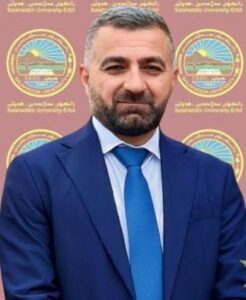
Asst. Prof. Dr. Zewar Zainal Omar
I was obtained BSc in Plant Protection at Salahaddin University-Erbil (SUE) in 2003-2004; then, I completed MSc in Entomology from Salahaddin University-Erbil (SUE) in 2008, and PhD in Entomology at Mosul University in 2016.
Furthermore, I taught various subjects, including Principles of Entomology, General Entomology, Insect Structure, Biological Control, and Insect Taxonomy at the Erbil Polytechnic University between 2008 and 2023. Besides, I was employed as head department of field crops between 2010-2012, and plant protection 2016-2019. Also, I participated as committee examination member then head of the committee in 2018-2019. In addition, since 2023 to present, I have been assigned as the Biology Head-Department at Salahaddin University-Erbil.
My research focuses on entomology, particularly applying biological control methods to manage pest populations. I am especially interested in studying the ecological relationships between pests and their natural enemies, such as parasitoids, predators, and entomopathogens, to develop effective and sustainable pest control strategies.
Population growth in the Kurdistan region is on the rise, and education is an essential requirement for the scientific progress of the next generation at a level that meets the high ambitions of its people. There is an urgent need to foster a generation of efficient teachers, skilled in biology and educational sciences. The department strives to fulfill this urge.
VisionScience evolves, concepts are changing with the scientific discoveries, and to create conscious generations in the future, a teacher must have an open mind, work by logic, and accurately convey information to students.
Graduates from the Department of Biology will:
- Understanding the fundamentals of zoology, botany, microbiology, genetics, ecology, biotechnology and human sciences.
- Applying biological concepts, laws, and theories across various fields such as medicine, health, agriculture, food industries, and ecological and natural systems.
- Skillfully and responsibly handling biological and laboratory equipment, devices, and materials, conducting practical experiments, analyzing results, and drawing scientific conclusions.
- Using computers, biological and mathematical software to solve problems, equations, simulate processes, design projects, and produce and publish academic work.
- Developing critical thinking, creativity, research skills, continuous learning, teamwork, effective communication, and adherence to scientific and professional ethics.
Degree Program Overview
Graduates are well-prepared for careers in education, healthcare, research, environmental agencies, quality control laboratories, biotechnology, and pharmaceutical industries. The Department of Biology's commitment to academic excellence, innovation, and community engagement ensures that graduates are equipped to make meaningful contributions to scientific progress and societal well-being.
- Biology Program
- Core Courses in Zoology, Botany, Microbiology, Cell Biology, and Biochemistry.
- Elective courses allow students to specialize in specific areas of interest, such as medicinal plant and endocrinology.
- Research Project in the final year to develop scientific investigation and data analysis skills.
- Program Structure
The biology program offers comprehensive understanding of the essential concepts of life sciences, emphasizing cellular, molecular and ecological biology. Zoology, botany, microbiology, genetics, ecology, physiology, and biochemistry are some of the diverse topics that students investigate. The curriculum emphasizes the combination of theory and practice through research projects, field studies, and laboratory activities. This program equips students with the essential skills for pursuing a wide variety of career opportunities, including roles in environmental agencies, research facilities, education, and quality control laboratories.
Both degree programs are four-year, full-time Bachelor of Science (B.Sc.) programs structured according to the European Credit Transfer and Accumulation System (ECTS). Each academic year is divided into two semesters, with students completing 30 ECTS credits per semester.
- Years 1 and 2 focus on foundational courses in zoology, botany, chemistry, and essential skills (e.g., computer skills and academic writing).
- Years 3 and 4 encompass electives, research projects, and specialized and advanced courses customized to each program.
Program learning outcome
- Students will be able to describe living systems, including their nature, organization and evolution.
- Students will be able to apply methods of scientific inquiry in biology.
- Students will be able to describe how human activities affect the living world and the physical environment.
- Students will be able to describe the flow of energy and matter within and among organisms.
- Students will be able to explain the historical context of biological discoveries.
- Students will be able to evaluate information by discriminating between science and non-science.
- Students will be able to evaluate and interpret quantitative data using the scientific method.
- Students will be able to practice safety and proper techniques in the laboratory.
- Students will be able to write accurately and clearly about biology topics.
- Students will be able to explain why science is an integral activity for addressing social and environmental problems.
First Semester
- EdB1101- Cell Biology (Core) (6 ECTS) cell theory and principals of animal and plant cells.
- EdB1102- General Botany (Core) (6 ECTS) Introduction to plant structure, growth, and function with practical sessions.
- EdB1103- Analytical chemistry (Core) (6 ECTS) Techniques for analyzing biological samples and chemical compounds.
- SU1001- Computer skills (Core) (3 ECTS) Basic computer applications and software tools for academic purposes.
- SU1002- Academic skills (Core) (6 ECTS) Academic writing, critical reading, and research skills.
- SU1004- English for University Students (Core) (3 ECTS) Development of academic English skills.
Second Semester
- EdB2101- General Zoology (Core) (6 ECTS) animal classifications and physiology with emphasis on diversity.
- EdB2102- Plant Anatomy (Core) (6 ECTS) Study of plant tissues and their organization with micro technique.
- EdB2103- Organic Chemistry (Core) (6 ECTS) Fundamentals of organic molecules and reactions relevant to biological systems.
- Ed2101- General Psychology (Core) (6 ECTS) Fundamentals of basic psychology.
- SU1003- Kurdish Studies (Core) (3 ECTS) Study of Kurdish history, culture, and language.
- SU1005- English for Specific Purposes (Core) (3 ECTS) Discipline-specific English terminology and communication skills.
Third Semester
- EdB1201- Histology (Core) (3 ECTS) Introduction to animal tissues and their roles.
- EdB1202- Introduction to Invertebrates (Core) (3 ECTS) general phylum of invertebrates.
- EdB1203- Introduction to Plant Taxonomy (Core) (3 ECTS) basic of plant identification based on morphology.
- EdB1204- Introduction to Plant Anatomy (Core) (3 ECTS) Study of plant tissues and their organization with micro technique.
- EdB1205- Introduction to Biochemistry (Core) (3 ECTS) Study of biomolecules and metabolic pathways.
- EdB1206- Computer Application (Core) (2 ECTS) Introduction to programs used for statistics.
- EdB1207- Developmental Psychology (Core) (3 ECTS) including the developmental stage of psychological consequences.
Fourth Semester
- EdB2201- Embryology (Core) (3 ECTS) comparison between embryological stages within chordates.
- EdB2202- Invertebrates (Core) (3 ECTS) advanced invertebrates including medical importance of it.
- EdB2203- Plant Taxonomy (Core) (3 ECTS) plant systematics with phylogeny.
- EdB2204- Plant Anatomy (Core) (3 ECTS) Comparison between monocot and dicot plant based on anatomy.
- EdB2205- Enzymes and Hormones (Core) (3 ECTS) describing different type of enzymes and hormones.
- EdB2206- Biostatistics (Core) (2 ECTS) principal of statistics with its modern approach.
- EdB2207- Educational psychology (Core) (3 ECTS) approaches education.
Fifth Semester
- EdB1301- Genetics (Core) (3 ECTS) principal of Mendelian genetics.
- EdB1302- Introduction to Animal Physiology (Core) (3 ECTS) principal of animal organs and system.
- EdB1303- General Entomology (Core) (3 ECTS) major families of class insects.
- EdB1304- Ecology (Core) (3 ECTS) general tests for water and soil study.
- EdB1405- Introduction to Microbiology (Core) (3 ECTS) general introduction to virus, Bacteria and fungi.
- EdB1306- Phycology (Core) (3 ECTS) major families of algae.
- EdB1307- Measurement and Evaluation (Core) (3 ECTS) principals of measurement and assessment of students based on psychology.
Sixth Semester
- EdB12301- Medical Genetics (Core) (2 ECTS) general diseases related to genetic.
- EdB2302- Animal Physiology (Core) (3 ECTS) Advanced animal organs and system.
- EdB2303- Medical Entomology (Core) (3 ECTS) medical used of insects.
- EdB2304- Pollution (Core) (2 ECTS) fundamentals of soil, water, air pollution.
- EdB2405- Microbiology (Core) (3 ECTS) tests for identified bacteria.
- EdB2306- Mycology (Core) (3 ECTS) major families of fungi.
- EdB2307- Teaching Method and Viewing (Core) (4 ECTS) modern methodology of schooling and visiting schools for further acquaintance to teaching method.
Seventh Semester
- EdB1401- Parasitology (Core) (3 ECTS) general introduction to parasites.
- EdB1402- Introduction to Plant Physiology (Core) (3 ECTS) fundamentals of C3 and C4 plant with major growth regulators.
- EdB1403- Immunology (Core) (3 ECTS) fundamentals of immune system with general tests for immunity.
- EdB1404- Introduction to Molecular Biology (Core) (3 ECTS) Central dogma.
- EdB1405- Practicum (Core) (2 ECTS) 40 days training in school.
- EdB1406- Optional (Elective) (2 ECTS) student select one subject out of two.
- EdB1407- Research project (Core) (2 ECTS) fundamentals of research methodology.
Eighth Semester
Admissions
- Zankoline (government-funded) Study
- Description: This option provides free tuition for students who meet the eligibility criteria and are accepted through the general centralized admission system, known as "Zancoline."
- Eligibility:
- Applicants must meet the academic requirements of the Ministry of Higher Education and Scientific Research.
- Selection is competitive and based on high school scores, particularly in scientific subjects.
- Benefits:
- Exemption from tuition fees.
- Access to complete university services and facilities.
- Parallel Study (Self-Funded)
- Description: This option allows students who do not secure a Zankoline seat to pursue their studies by paying a tuition fee.
- Tuition Fee: 3,000,000 IQD per year.
- Eligibility:
- Students must meet the minimum academic requirements for admission to the Biology program.
- This option provides additional opportunities for students to catch up on the Zankoline criteria.
- Benefits:
- Access to the same high-quality education, resources, and facilities as Zancoline students.
- Students can pursue their academic goals without being limited by centralized admission quotas.</li.
Admission Requirements for Both Tracks
- Academic Qualifications:
- Completion of high school with a focus on the science track (biology, chemistry, and physics).
- Minimum GPA as determined by the Ministry of Higher Education.
- Application Process:
- Apply through the centralized admission system for Zankoline
- Submit required documents, including transcripts, identification, and certificates.
- Language Proficiency:
- Basic proficiency in English, as several courses are delivered in English.
- Kurdish language proficiency is also beneficial.
Graduate Employability
The Department of Biology is committed to equipping graduates at all levels, “Bachelor’s, Master’s, and Doctorate,” with the knowledge, skills, and experiences necessary to thrive in diverse career paths. Our graduates are well-prepared for opportunities in academia, industry, government, and beyond, with a focus on contributing to scientific advancement and societal development.
Bachelor of Science (B.Sc.) in Biology
Graduates of the B.Sc. program possesses foundational knowledge
and practical skills that open doors to a variety of career opportunities:
Career Paths:
- Medical and Diagnostic Laboratories: Assisting in disease diagnosis, treatment monitoring, and health promotion.
- Biotechnology and Pharmaceutical Companies: Roles in research, quality control, and production.
- Environmental and Conservation Organizations: Contributing to biodiversity, ecological management, and sustainability projects.
- Quality Control and Food Safety: Ensuring compliance with safety standards in food production and industrial processes.
- Education: Teaching biology at secondary schools or training centers.
- Government and NGOs: Roles in health departments, environmental agencies, or research initiatives.
Skills for Employability:
- Laboratory competency with modern techniques and tools.
- Analytical and problem-solving abilities for addressing biological challenges.
- Effective communication for scientific and public engagement.
- Noor Ali Gheni, Nadir Mustafa Nanakali and Kalthum Assaf Maulood. Protective Effect of Aqueous Extract of Neem (Azadirachta indica) Leaves Against Nicotine-Induced Oxidative Stress in a Model of Hyperlipidemia.
- Noor A. Ghani, Mahfoodha A. Umran, Muayad S. Shawkat. Cytotoxic activity of ethanol extract of Sesamum indicum seeds to cancer cell lines in vitro.
- Noor A. Ghani, Mahfoodha A. Umran, Muayad S. Shawkat. Effect of Ethanol Extract of Sesamum indicum Seeds on Lipid Profile in vivo.
- FULL DIALLEL CROSSES FOR ESTIMATION OF GENETIC PARAMETERS IN MAIZE. HA Sadalla, MO Barznji, SA Kakarash. Iraqi Journal of Agricultural Sciences 48.
- Effect of maize succession with winter crops on growth and productivity of maize. MOH Barznji, SM Maaroof. Indian Journal of Ecology 49 (5), 1854–1859.
- EFFECT OF MAIZE SUCCESSION WITH SOME WINTER CROPS ON SOIL NPK AND ORGANIC MATTER. MOH Barznji, ATR Dizayee. Plant Archives 21 (1), 882–886.
- Full Diallel Cross Analysis in Maize for Yield Component Traits. MOH Barznji, HA Sadalla. 2nd Scientific Conference of Garmian University (2015).
- https://scholar.google.com/citations?view_op=view_citation&hl=en&user=AoQ8aLQAAAAJ&citation_for_view=AoQ8aLQAAAAJ:u-x6o8ySG0sC
- Neonatal sepsis: Bacteriological profile, molecular detection and antimicrobial susceptibility test among pre-term pediatrics in Erbil city, Iraq.
- Molecular detection of β-lactamase genes in Klebsiella pneumoniae and Escherichia coli isolated from different clinical sources.
- Impact of alcoholic and aqueous extracts of Annona muricata on the growth of Staphylococcus aureus and Escherichia coli isolates.
- Serological diagnosis and epidemiological impact of Helicobacter pylori infection on human health in Diyala Governorate, Iraq.
- Prevalence of Hepatitis B Virus infection among general people and hemophilia patients in Erbil City, Iraq during 2020–2021.
- Application of salmonella phage to reduce in-vitro and in-vivo colonization of salmonella enteritidis and salmonella typhi.
- Transcriptional analysis of molecular interactions between Streptococcus mutans and Candida albicans in mixed-biofilms in cancer patients.
- Phylogenetic and palynological study of the genus Potentilla L. (Rosaceae) in Kurdistan Region-Iraq.
- Phylogenetic relationships among some species of the genus Convolvulus (Convolvulaceae) in Kurdistan Region-Iraq.
- Phylogenetic relationships among some species of the genus Hypericum (Hypericaceae) in Kurdistan Region-Iraq.
- Green synthesis ZnO nanoparticles and their effects on plant growth.
- العلاقة بين التحفيز الدراسي والانخراط الأكاديمي: دراسة استطلاعية في البيئة الجامعية.
- تأثير استخدام التكنولوجيا في التعليم على تطوير مهارات التفكير الناقد لدى الطالب.
- العلاقة بين التحفيز الدراسي والانخراط الأكاديمي: دراسة استطلاعية في البيئة الجامعية.
- تأثير استخدام التكنولوجيا في التعليم على تطوير مهارات التفكير الناقد لدى الطالب.
- S.K. and Saeed, J.F. (2021). Vascular Plants of Bani Harir Mountain (Harir intramural bound). Zanco Journal of Pure and Applied Sciences, 33(5), 57–68.
- Muhammed, Z.S., Mahmood, B.J., Ghareeb, S.A. and Saeed, N.A. (2025). Seeds and oil properties of some Niger (Guizotia abyssinica cass) cultivars. Journal of Medicinal and Industrial Plants, 3(1), 66–79.
- Bachelor in Food Industries, Halabja Technical College of Applied Sciences, Sulaimani Polytechnic University, Iraq (2010–2014).
- Master’s degree in Food Industry Science and Engineering (Food Biotechnology), University of Urmia, Iran (23/02/2022).
- Assistant Lecturer, Department of Biology, College of Education – Shaqlawa, University of Salahaddin, Iraq (26/02/2025).
Academic Advising
- Individualized Advising Sessions: Each student is assigned an academic advisor who provides personalized guidance specifically tailored to the student's interests, strengths, and career aspirations. Advisors also support the selection of courses, the development of academic pathways, and the resolution of educational challenges.
- Course Selection and Registration Support: Advisors assist students in selecting appropriate courses each semester to guarantee that they make rapid progress toward graduation. Registration assistance is offered to help students avoid scheduling conflicts and fulfill prerequisite requirements.
- Career Planning and Development: Academic advisors provide helpful advice concerning internships, postgraduate opportunities, and potential career paths. Graduate students may obtain guidance regarding their research interests, thesis topics, and program selection.
- Monitoring Academic Performance: Advisors evaluate student progress and offer assistance when academic obstacles arise. Students are assisted in maintaining their academic progress by implementing early intervention strategies, including tutoring recommendations and study skill seminars.
- Workshops and Seminars: Workshops are conducted regularly to improve student success, including study skills, time management, research techniques, and career development. Advisors may also arrange seminars involving guest speakers from academia, industry, and healthcare to provide students with an understanding of real-world applications of biology.
- Mentorship Programs: Senior students and alumni may assist in mentoring junior students, sharing their experiences and advice to help with academic and career decisions.
internship opportunities:
The Department of Biology promotes professional development and practical experience by providing extensive internship opportunities. These internships allow students to gain sensible expertise in real-world environments, thereby bridging the gap between classroom learning and professional practice.
Benefits of Internships
- Practical Skill Development: Internships allow students to apply theoretical knowledge in real-world contexts, honing their laboratory, research, and technical skills.
- Career Exploration: Students gain insights into potential career paths, helping them make informed decisions about their professional futures.
- Professional Networking: Internships help students connect with industry professionals, researchers, and potential employers.
- Enhanced Employability: Work experience makes graduates more competitive in the job market, demonstrating their readiness for professional roles.
- Academic Credit: In some cases, internships can be counted toward academic credit, enhancing the learning experience.
Types of internship opportunities
- Healthcare and Medical Laboratories: Students can intern at hospital laboratories, diagnostic clinics, and medical research centers, acquiring experience in clinical research, pathology, and medical testing. The internships focus on immunology, clinical chemistry, microbiology, and hematology.
- Research Institutions: Opportunities are available in private laboratories, government research centers, and university-affiliated research laboratories. Students can participate in biotechnology, molecular biology, genetics, and epigenetics initiatives.
- Environmental Agencies: Internships with governmental agencies and environmental organizations offer practical experience in conservation biology, ecological monitoring, and ecology. It is feasible for students to engage in environmental assessments, data collection, and fieldwork.
- Biotechnology and Pharmaceutical Companies: Quality control, drug development, and biotechnological research are among the various skills that internships in pharmaceutical and biotechnological industries provide.
- Food Safety and Quality Control Centers: Students can work in food laboratories and quality assurance departments, focusing on food microbiology, safety testing, and regulatory compliance.
- Public Health Organizations: Internships with public health agencies and NGOs allow students to engage in disease prevention programs, epidemiology, and health awareness campaigns.
- Educational Institutions:Teaching assistantships in schools and universities provide opportunities for students interested in science education and outreach.
How to Apply for Internships
- Advising Support: Academic advisors help students identify suitable internships based on their interests and career goals.
- Department Partnerships: The Department of Biology collaborates with various institutions and organizations to secure student internship placements.
- Application Process: Students typically submit a resume, cover letter, and academic transcripts to the host institution. Some internships may require an interview or skills assessment.
- Timing: Internships are usually offered during summer breaks or as part of the final-year curriculum.
Career Services
The Department of Biology is dedicated to providing comprehensive career services to assist students in their professional development. These services are intended to assist students in pursuing their career objectives, regardless of whether they intend to pursue graduate studies, enroll in the workforce, or investigate entrepreneurial opportunities. Career services provide students with the skills, resources, and insights to navigate the job market effectively.
Key Career Services Offered
- Career counseling and advice: Students obtain personalized career counseling sessions to assist them in identifying their strengths, interests, and potential career paths in biology, biomedical sciences, healthcare, research, and related industry sectors. Advisors offer advice on postgraduate study opportunities, career planning, and job search strategies.
- Workshops and Seminars: The department performs workshops and seminars on various topics, including interview preparation, networking skills, job market trends, and resume and cover letter writing.These sessions help students build confidence and gain practical knowledge for the job search process.
- Job Placement Assistance: The department partners with local hospitals, laboratories, research institutions, biotechnology firms, and environmental agencies to promote the connection between students and potential employers. Support for employment placement encompasses the dissemination of job postings, apprenticeship opportunities, and recruitment events.
- Career Fairs and Networking Events: The annual career fairs allow students to network with potential employers, receive insight into various career paths, and investigate career possibilities. Alumni, industry professionals, and faculty members are allowed opportunities to establish professional relationships through interaction at networking events.
- Graduate School Guidance: Supporting students who intend to be enrolled in M.Sc. or Ph.D. programs in biological sciences, including research proposal development, personal statement composition, and graduate school applications. Information sessions regarding opportunities for higher education on a local and international scale.
- Entrepreneurship Support: Career services offer resources on business planning, funding opportunities, and innovation in biosciences to students interested in establishing their businesses—collaboration with university entrepreneurship programs and local business incubators.
Benefits of Career Services
- Enhanced Employability: Students with strong resumes, interview skills, and professional connections are better prepared to enter the job market.
- Tailored Guidance: Personalized advising ensures each student receives support that is aligned with their unique goals.
- Industry insights: exposure to current trends and expectations in biology-related careers helps students stay competitive.
- Confidence and Readiness: Practical training and resources build confidence in students’ ability to pursue their desired careers.
Asst. Prof. Dr. Zewar Zainal Omar — Head of Biology Department
- Email: [email protected]
- Phone: +9647504529386